Erasmus+ mobility “Brain-Based Learning: How Students Really Learn”
27/09/2026

Brain-Based Learning: How Students Really Learn
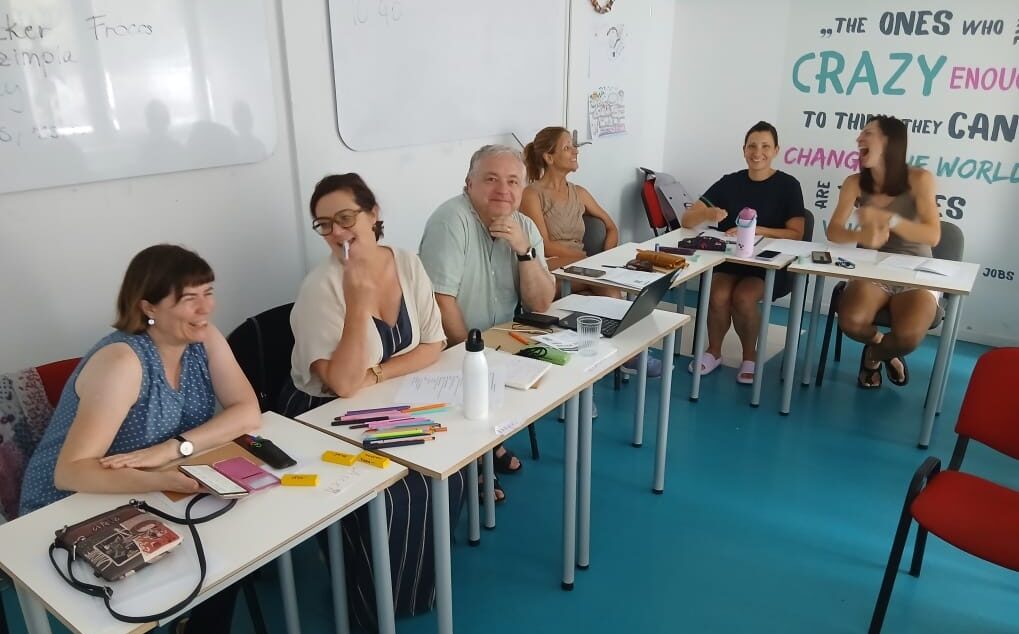
From August 10 to 15, Ričardas Pagojus, a lecturer delivering professional development training at the Public Service Language Centre (PSLC), participated in the Erasmus+ mobility “Brain-Based Learning: Understand How Students Really Learn” in Budapest, Hungary. The mobility was organised as part of the PSLC’s Erasmus+ project “Transforming the Teacher’s Role in a Rapidly Changing World” (2025-1-LT01-KA122-ADU-000327204).
The teacher chose this week of intensive professional development to gain a deeper understanding of how students learn and how teaching can be adapted in light of the latest findings in neuroscience. Throughout the training, he actively engaged in practical activities exploring the principles of attention, context, emotions, memory formation, and motivation. From the very first day, he demonstrated curiosity and a strong desire to understand the mechanisms underlying learning. This enthusiasm enabled him to quickly grasp the key concepts of the course and relate them to his own professional experience.
Throughout the course, the teacher not only examined learning processes but also designed activities and lesson structures based on scientific evidence. He explored a range of techniques, including priming, pre-testing, elaboration strategies, and retrieval practice, and reflected on how these approaches can increase student engagement and support the long-term retention of knowledge. He actively contributed to discussions, shared his professional experience, and confidently explored ways of transforming traditional lessons into learning experiences that are more engaging, creative, and responsive to students’ needs.
At the end of the week, the teacher returned to his school with a wealth of new ideas, practical tools, and a clearer understanding of how to help students learn “smarter, not harder.” He strengthened his ability to guide students towards effective learning strategies, increased his own professional motivation, and broadened his perspective on teaching and learning.
His experience on the course is an inspiring example of how a sustained interest in the science of learning can enrich everyday teaching practice and contribute to creating a learning environment in which students can experience greater engagement, confidence, and the genuine joy of learning.