Erasmus+ teacher training course titled “Active Citizenship, Environmental Sustainability, Leadership, and Positive Schooling”
06/01/2026
Beyond the Classroom Walls (Azores – São Miguel)
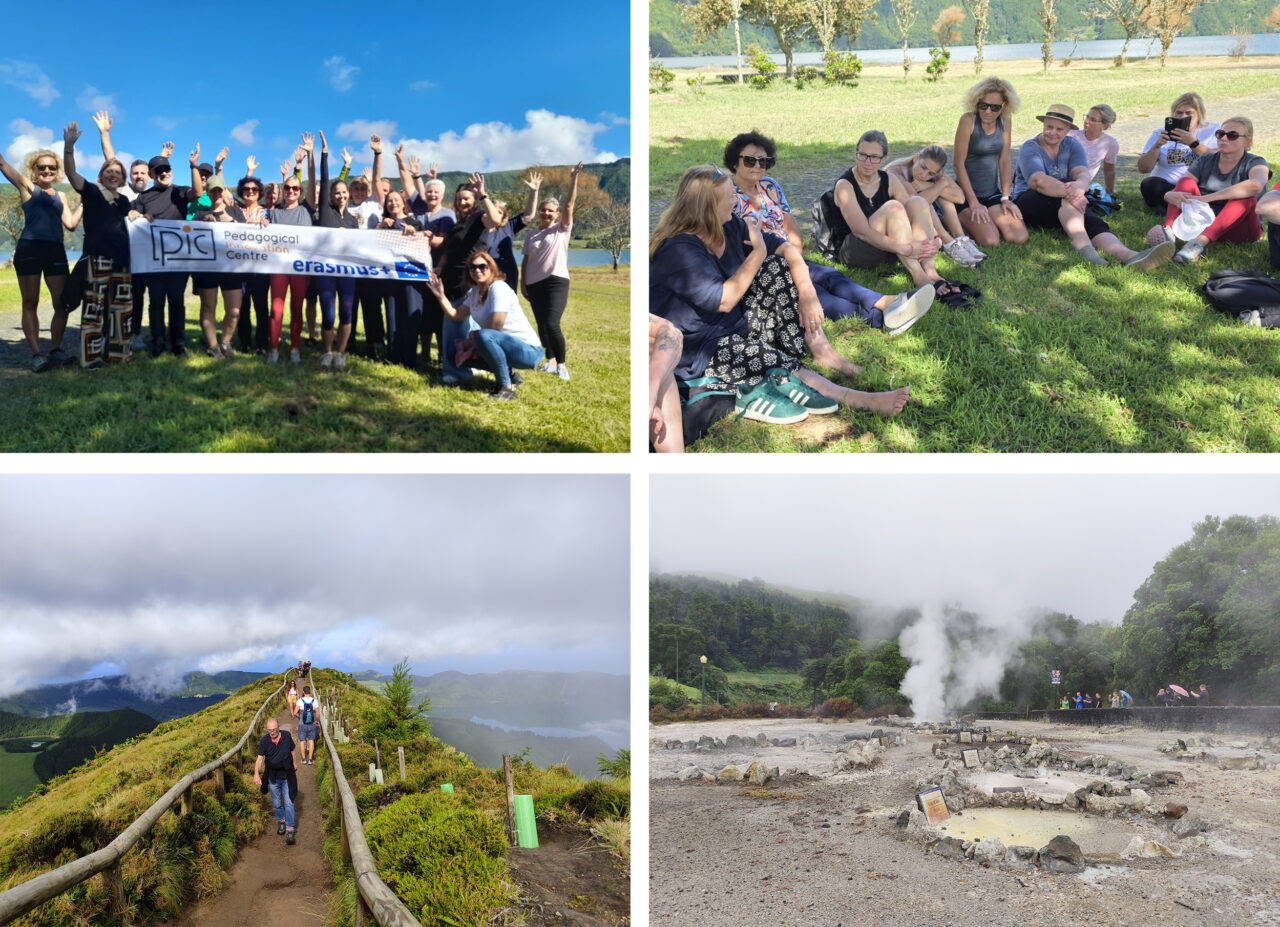
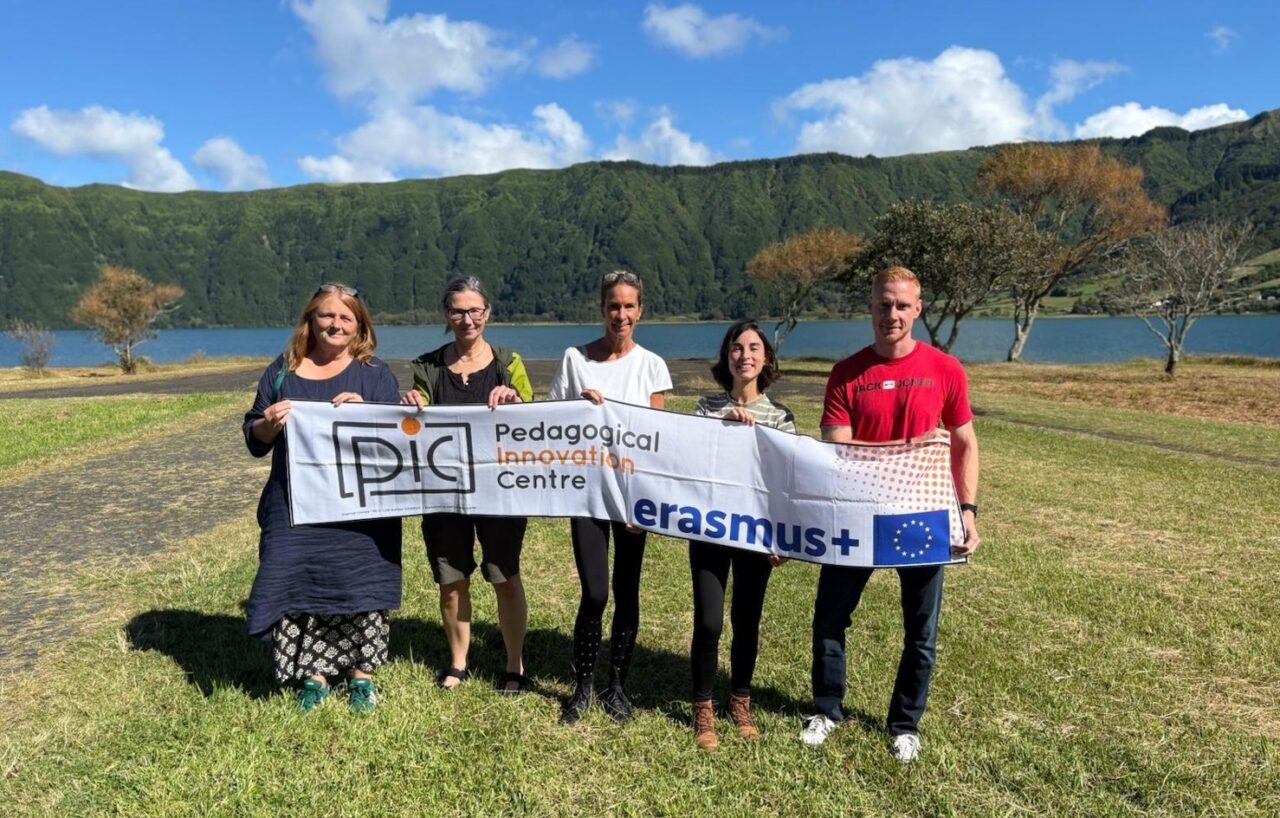
What happens when the classroom moves outdoors and learning continues beyond classroom walls, with nature becoming the teacher? From 29 September to 4 October 2025, this idea came to life during an Erasmus+–funded mobility in the Azores (São Miguel). The course “Active Citizenship, Environmental Sustainability, Leadership, and Positive Schooling” welcomed teachers interested in sustainability, positive education, and experience-based learning, including a teacher of The Public Service Language Centre Rita Samukienė. The programme brought together educators from Lithuania, Germany, Italy, Slovenia, and Estonia, creating an international space for sharing ideas and good practices.
The course began with discussions on active citizenship, sustainability, and climate education, focusing on how these topics can be integrated into everyday classroom work and extended through learning outside the traditional classroom setting. A large part of the programme was based on outdoor learning, using the natural environment as a meaningful and inspiring learning space.
Participants visited the Caldeira of Furnas, where learning took place directly in the volcanic landscape while exploring geothermal energy, sustainability, and the relationship between nature and local culture. At the Furnas Monitoring and Research Centre, they explored environmental research and protection projects and discussed how real-world examples can enrich teaching. In Sete Cidades, learning continued outdoors through observation of lakes, volcanic formations, and endemic plants, alongside discussions on nature protection and community involvement.
One of the most memorable experiences was the visit to the Centro Ambiental do Priolo, where participants learned about the endangered Priolo bird and how long-term conservation efforts helped restore its habitat. This experience showed how environmental protection can be transformed into hands-on, project-based learning. During the course, the participants also took part in simple mindfulness activities, such as breathing and relaxation exercises, which helped them calm the mind, reduce anxiety, and improve focus. These practices highlighted how moments of awareness and calm can support both teachers’ well-being and students’ learning.
The participants also took part in whale and dolphin watching, gaining direct insight into marine life and wildlife conservation. On the final day, outdoor activities in Ponta Delgada linked STEAM subjects, history, and civic education, demonstrating how learning can happen anywhere, not only in the classroom.
The course strongly supported participants’ personal and professional development. Sessions on leadership, teamwork, and creating a positive and inclusive school environment showed how mindfulness and positive education can help learning both in and outside the classroom. Participants deepened their understanding of sustainability, climate education, and outdoor learning, gained ideas for interactive lessons, and developed important communication and leadership skills. Overall, the course showed how experiential learning can motivate students, support inclusion, and encourage care for the environment, making teaching more meaningful, relevant, and effective.